Khadda Master.
The work before the model: building and refining a pothole segmentation dataset.
01 / The experience
A closer look.
Actual screens.
From the idea to the interface.
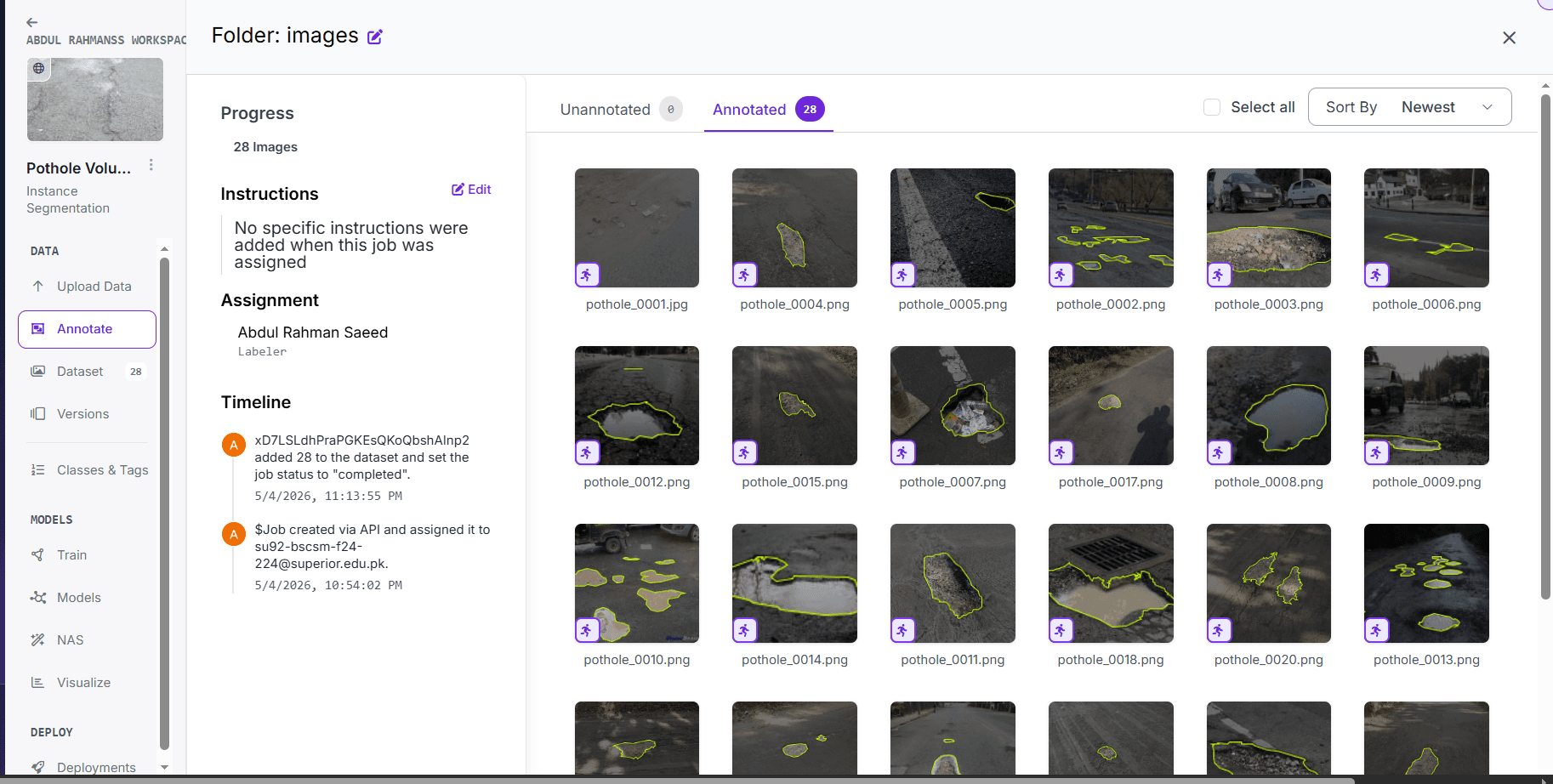
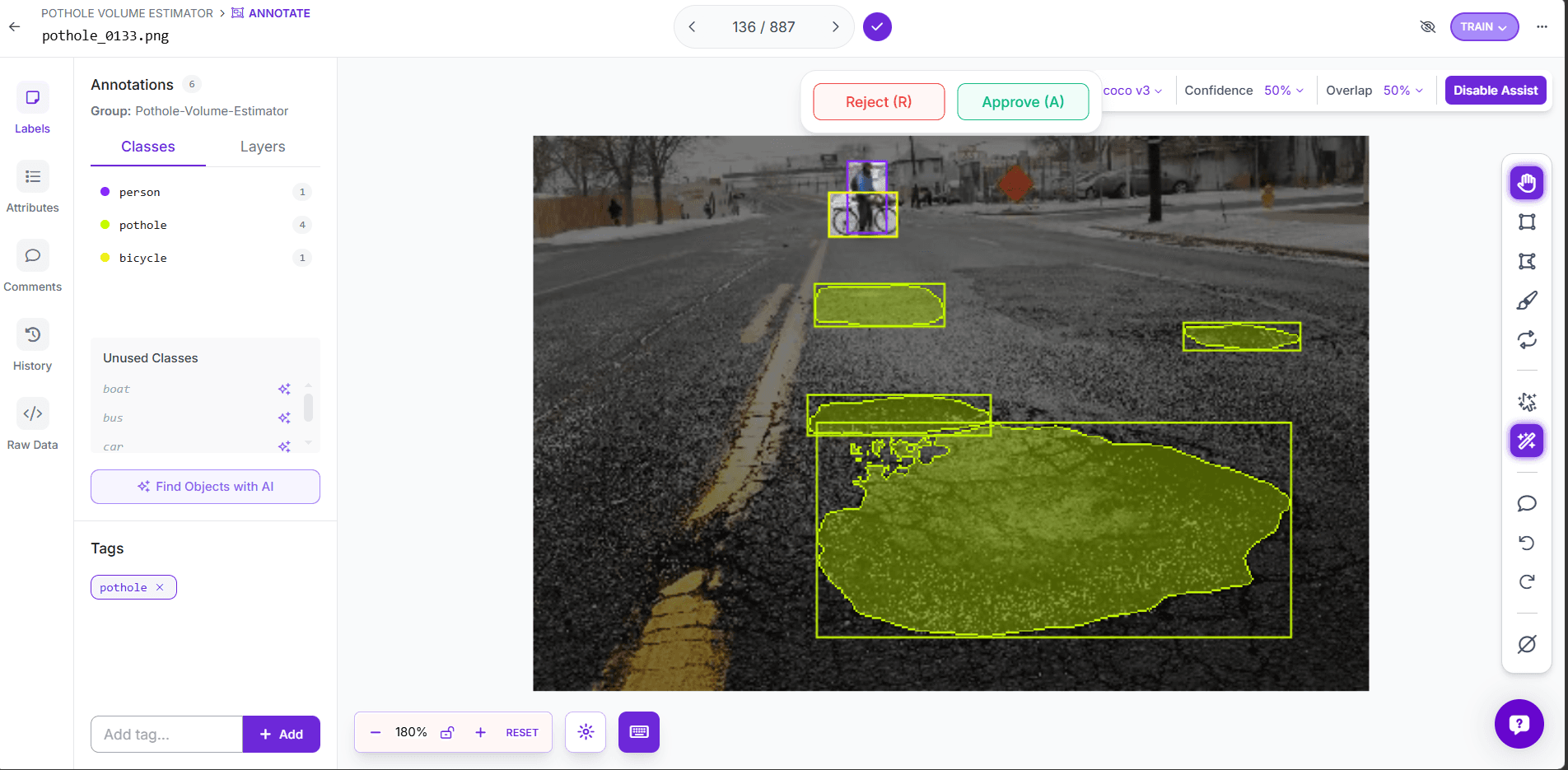
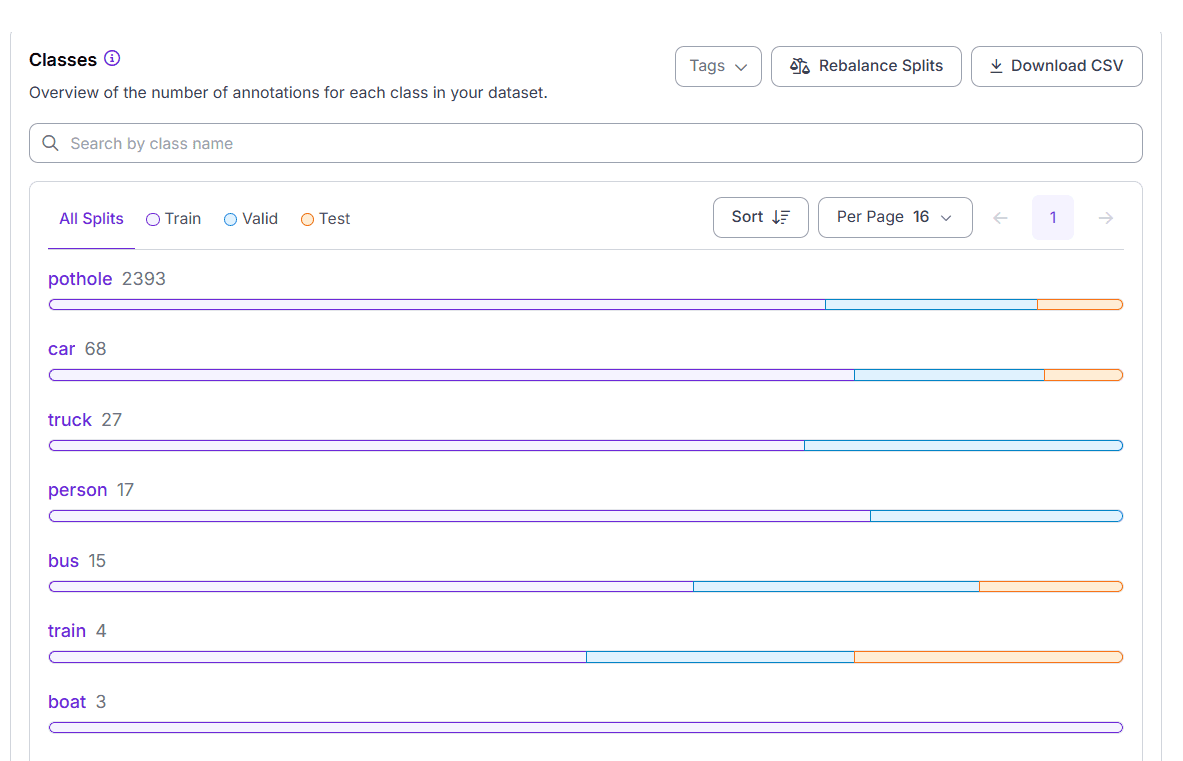
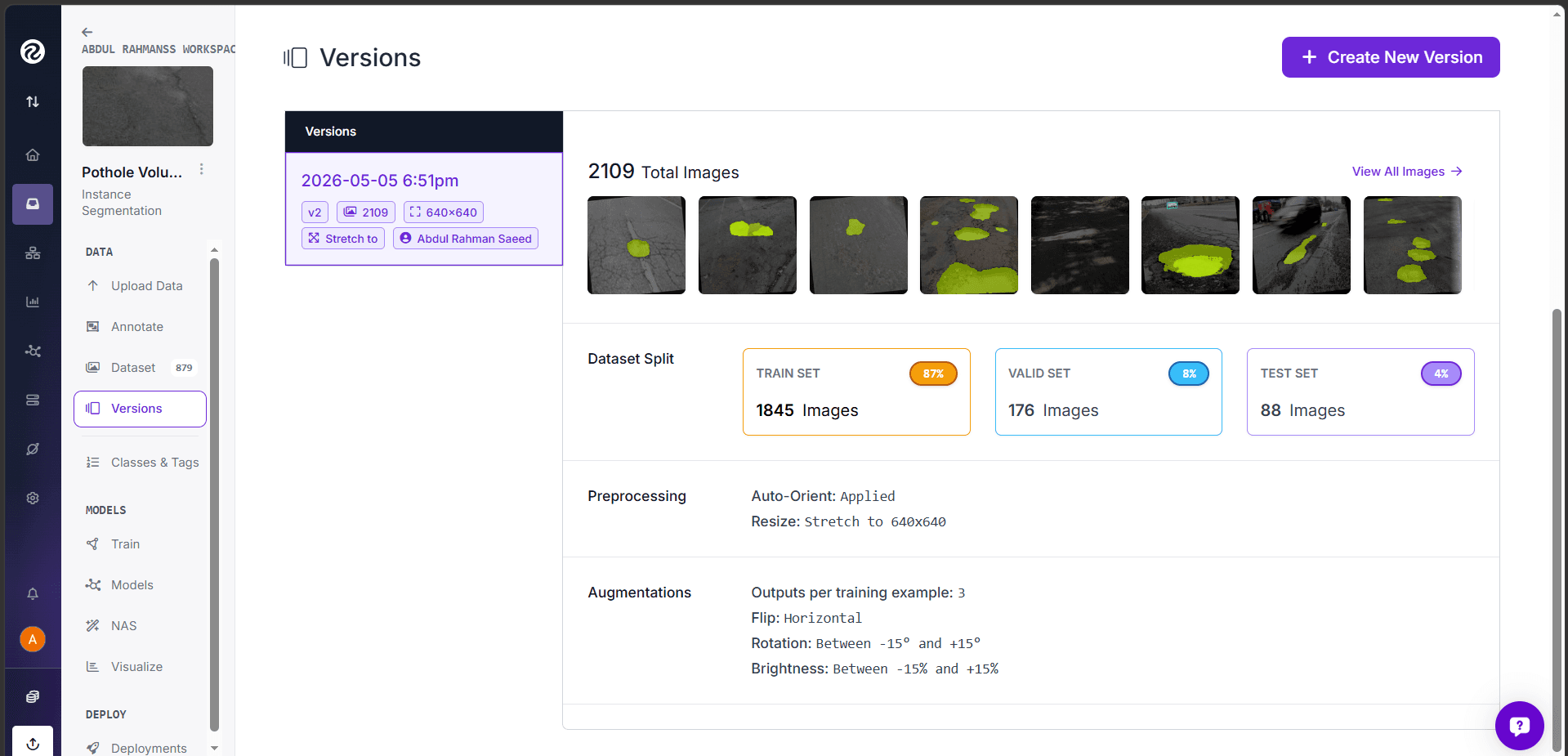
Tracing the boundaries
Polygon annotation with assistance from the Segment Anything Model.
02 / Behind the build
The thinking
underneath.
What it does
A computer vision dataset workflow for pothole volume estimation, from raw images through reviewed annotations to a COCO Instance export. The focus is the quality and structure of the data a segmentation model will learn from.
How it comes together
I used Meta's Segment Anything Model to assist with polygon boundaries, combined model-generated labels with human review, and inspected class balance and object frequency before preprocessing and augmentation.
Annotate, then inspect
SAM-assisted polygons and API-generated labels enter a review stage before approval. The workflow keeps a person involved in checking the generated annotations.
Understand the dataset
Exploratory analysis examines pothole targets and contextual classes, including vehicles and pedestrians, to understand what the dataset contains.
Prepare for training
Auto-orientation, 640 × 640 resizing, horizontal flips, rotations, and brightness adjustments prepare image variants. COCO Instance JSON retains the segmentation annotations for Mask R-CNN training.